
How San Luis Obispo Arrests Work
SLOPD polices the city. The San Luis Obispo County Sheriff runs adult custody for the whole county. After a city arrest, the person may be cited and released, or taken to San Luis Obispo County Jail for booking. When county intake happens, the Sheriff Booking Log lists SLOPD as the arresting agency. The jail is county run. The arrest itself came from city police. San Luis Obispo is also the county seat and its largest incorporated city, with a 2020 Census population of 47,063. The city Public Log gives incident context. The county roster shows who is currently held. Someone missing from the roster may still have a city incident on file, and a gap there proves nothing.
SLOPD Arrest Log Posting Times
The SLOPD Police Log page links straight into the searchable Public Log repository. The city posts logs Monday through Friday, with weekend activity posted on Monday. Most entries appear by roughly 3:00 p.m. A paper copy route exists too: the police records counter keeps one during weekday business hours. That schedule builds in a lag. A Saturday arrest can hit the county booking data first. The Monday city log catches up afterward. Even on weekdays, the Sheriff feed and the city log refresh at different moments. Remember the scope. The SLOPD source is an activity log, not a full jail list. It includes calls and reports that never become bookings. The SLOPD Public Log repository lays out the city's official search structure.
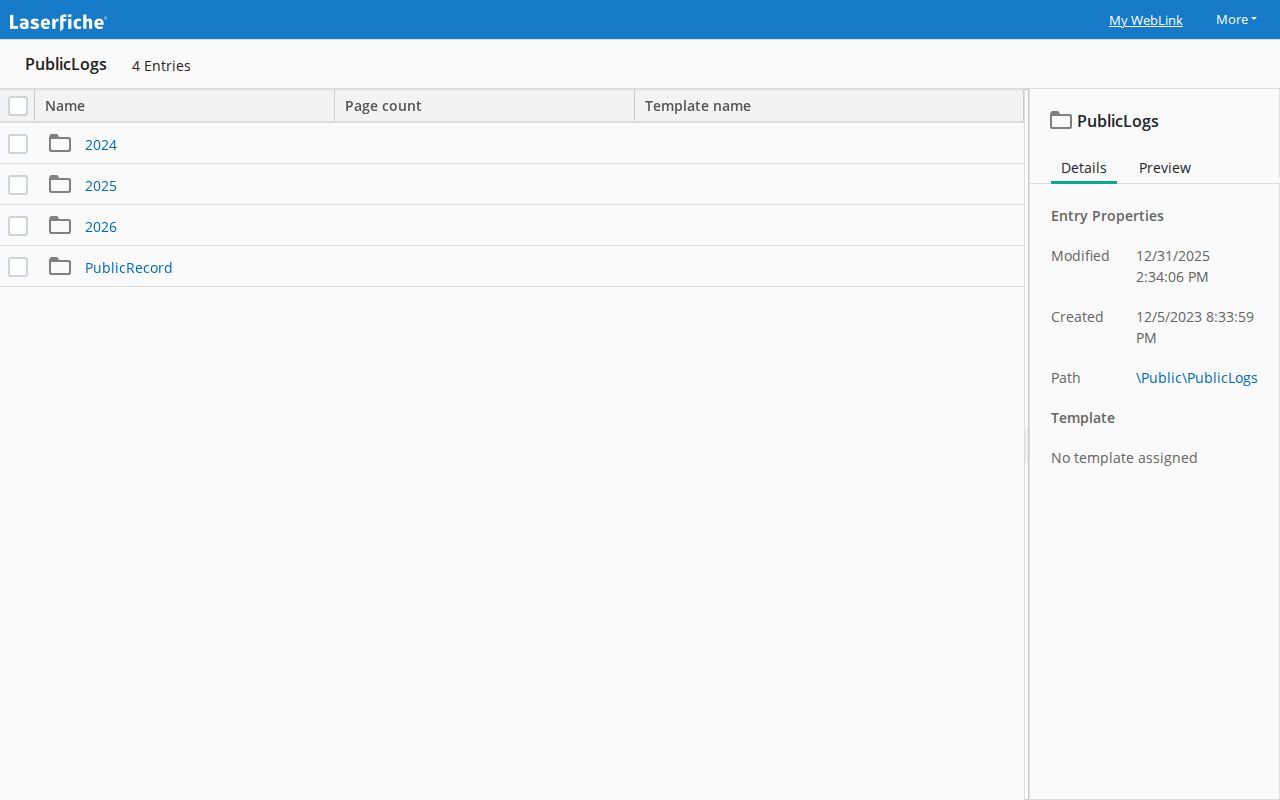
Treat the repository as context. Pair it with the county roster. It is not a live jail list. Booking status comes from the Sheriff.
Where San Luis Obispo Arrests Appear
Start any San Luis Obispo arrest check with official sources. City records show SLOPD activity. Sheriff records show booking and custody. Court records carry the case status after that. News outlets and third-party indexes add color, but they pick and choose, run behind, and may keep stale material long after an official feed updates.
| Channel | Official? | Best use | Photo status |
|---|---|---|---|
| SLOPD Public Log | Yes | City incidents and activity on its posting schedule | No gallery established |
| Sheriff Booking Log | Yes | Processed county bookings and arresting agency | No gallery |
| Who’s In Custody | Yes | Current county custody and roster fields | No roster gallery observed |
| Superior Court | Yes | Case documents and disposition checks | Not a booking-photo source |
| Local news | No | Selected event and agency-statement context | Story-specific |
| Third-party indexes | No | Discovery only, followed by official verification | May be old or unavailable |
A booking photo is never guaranteed. The Sheriff's per-booking photo template sometimes shows an unavailable-image message, and SLOPD posts no public mugshot gallery. Ask the records office about a specific image. Skip any hunt for bulk collections.
Find Recent San Luis Obispo Arrests
Work from the event source to the custody source. City log first if the question is where and when SLOPD responded. Sheriff first if the question is whether someone entered or remains in county custody. That order keeps the search honest.
- Search the SLOPD Public Log by a relevant date or incident detail.
- Check the Sheriff Booking Log for a county booking with SLOPD as agency.
- Use Who’s In Custody when present custody is the key question.
- Allow for transport, intake, and the Booking Log’s minimum one-hour delay.
- Request the city incident record or county booking record when online data is insufficient.
- Verify the charge and outcome through San Luis Obispo Superior Court.
The Booking Log works on a rolling window. Pick a date and time, and it reaches back through the preceding 24 hours. Each entry can show the booking number. ID number, name, sex, birth date, booking date and time, charges, location, and agency may appear too. A detail view adds arrest location and court fields. All of it is booking data captured at intake, not final case findings. The Arrests Last 24 Hours page breaks the window down further.
City Arrest Log Versus Booking
One event, two records, and they rarely match. The city log captures the original call. It also records the incident location, the time, and the police response. A county booking comes later, after transport and intake. Its timestamp is booking time, which may differ from arrest time. The arresting-agency field is the tie that links a Sheriff entry back to SLOPD.
| Question | Best first source |
|---|---|
| What police activity occurred? | SLOPD Public Log |
| Was the person booked into county jail? | Sheriff Booking Log |
| Is the person currently held? | Who’s In Custody roster |
| Did custody later change? | Roster and California VINE |
| What happened in court? | Superior Court criminal records |
A person can show up in one source and not the other. Citations and releases before booking skip the county path entirely. So do juvenile matters. State custody, federal custody, and immigration detention do too. When two sources disagree, the cause is usually timing or scope. It is rarely a false entry. Note: A Monday city post may cover weekend activity. That activity may already appear in the Sheriff's county booking data.
Request SLOPD Arrest Records
The SLOPD Records page is the city route for police reports and incident records. The office runs a records counter, phone and fax contacts, and a policy-based release process. Check the current official page for the exact submission steps. Skip any numbers or street addresses you find elsewhere. Confirm them direct with the office. A strong request gives the incident or case number if known. Add the date, location, name, and record type. Adult arrest summaries may include name, occupation, physical description, birth date, arrest time and place. They may also list factual circumstances, booking time, bail, holding location, charges, and release details. Active cases, victims, juveniles, and protected information can all limit what gets released.
- Identify whether SLOPD or the Sheriff created the desired record.
- Give the date, location, name, and incident or booking number.
- Describe the exact report, summary, or photo requested.
- Wait for the agency’s access review and any required redaction.
- Use the court separately for case documents and disposition.
Know where each record lives. A San Luis Obispo police report stays with SLOPD. A county booking record belongs to the Sheriff's Office. The court clerk's criminal case request form covers none of that. It does not hand over city reports, incident papers, or booking photos. Treat it as the wrong door for those items.
San Luis Obispo Booking Details
The Sheriff's official Booking Log anchors San Luis Obispo booking details. It lags by at least an hour. The agency field can read SLOPD. That can happen even for a city arrest. Nothing in a record is final. An entry can list charges, booking time and location, bail, the docket, and a next court date, and a later filing can amend a count while a judge resets release terms. The official San Luis Obispo County Booking Log page itself displays the county interface, with its time and agency filters in plain view.
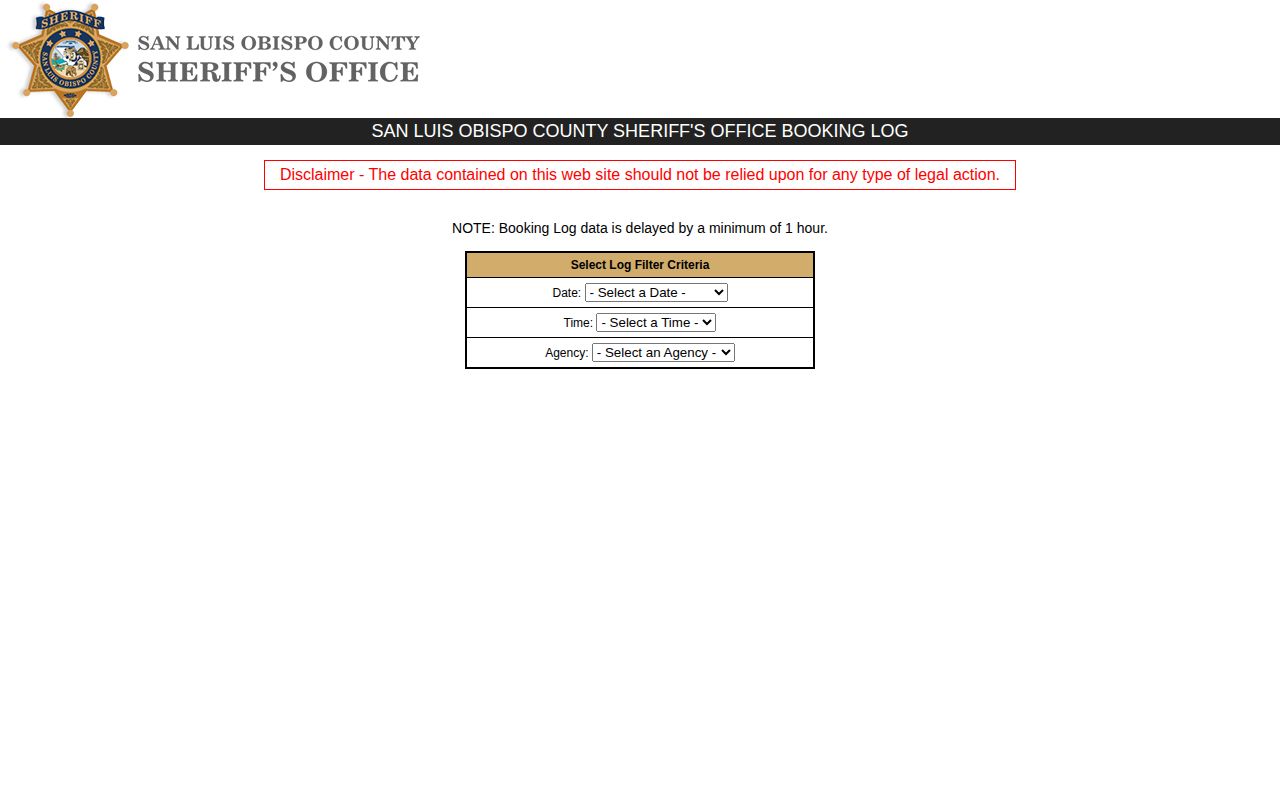
Filtering the log to SLOPD helps. It still won't capture every San Luis Obispo arrest. Agency data and timing gaps keep it from being a complete city list. Older bookings drop out of view. The web feed holds roughly thirty days of entries before rolling over. For an older record, the county's PRA and data-request route is the right channel. Sheriff policy archives released booking-unit records electronically under a records schedule. It states no public web duration.
Verify San Luis Obispo Arrest Outcomes
Outcomes live at the courthouse. The Superior Court Criminal Division handles local infractions, misdemeanors, and felonies. Its case-information route points the public to re:SearchCA. Some cases lack information there, the court warns. A public notice adds that, since July 1, 2026, most case information should come through re:SearchCA or written requests rather than the old third-party case-summary process.
Booking and court systems update on their own schedules. A next court date can be continued. Charges can be changed, dismissed, diverted, or never filed at all. In-custody first appearances happen at the San Luis Obispo court location, but that doesn't turn the booking log into a court calendar. Check the court record before calling an outcome.
- Booking
- Jail intake that creates an administrative custody record.
- Bail
- A release condition or amount that may later change.
- Arraignment
- An early hearing where charges and pleas are addressed.
- Disposition
- The later court outcome of the case.
San Luis Obispo Police News
Local newsrooms do most of the heavy lifting on San Luis Obispo arrest stories. The San Luis Obispo Tribune Crime section, KSBY Local News, New Times, and Cal Coast News all report on city arrests, county investigations, hearings, and court outcomes. Coverage depends on the event. A major investigation or an agency press release draws a story. A routine booking at the county jail usually does not. A single article may name a charge and a holding facility, then never follow up when the person is released or the case is dropped.
Third-party arrest sites deserve more caution. RecentlyBooked keeps a San Luis Obispo County page along with older person pages, and its current entries can clash with the official record and even with its own archives. Mugshots.com lists the county under California. Arrests.org offers statewide filters but no county-specific page for San Luis Obispo. BustedNewspaper and Mugshots.zone have no county-local pages either. Treat these sites as leads, not answers.
Do not build a gallery from third-party mugshots. News coverage and indexes can point you to a name, a date, or an agency. Go back to SLOPD, the Sheriff, or the court to confirm what actually stands. A stale page proves nothing about who is in custody now.